
Most online course creators don’t have a content problem; they have a problem with students not finishing.
You can pour your heart into recording lessons, designing modules, and packaging your expertise… But if students drop off halfway, none of that effort turns into real transformation or revenue.
And here’s the uncomfortable truth:
📉 The average online course completion rate ranges between 10% and 30%.
Meaning 70%–90% of students never finish what they paid for.
Not because your content isn’t good. But because people get distracted easily online, lonely, and find it easy to abandon. So when students get overwhelmed, they lose motivation and leave the course midway. The good news?
These problems are predictable. And more importantly, you can fix them with the right retention system.
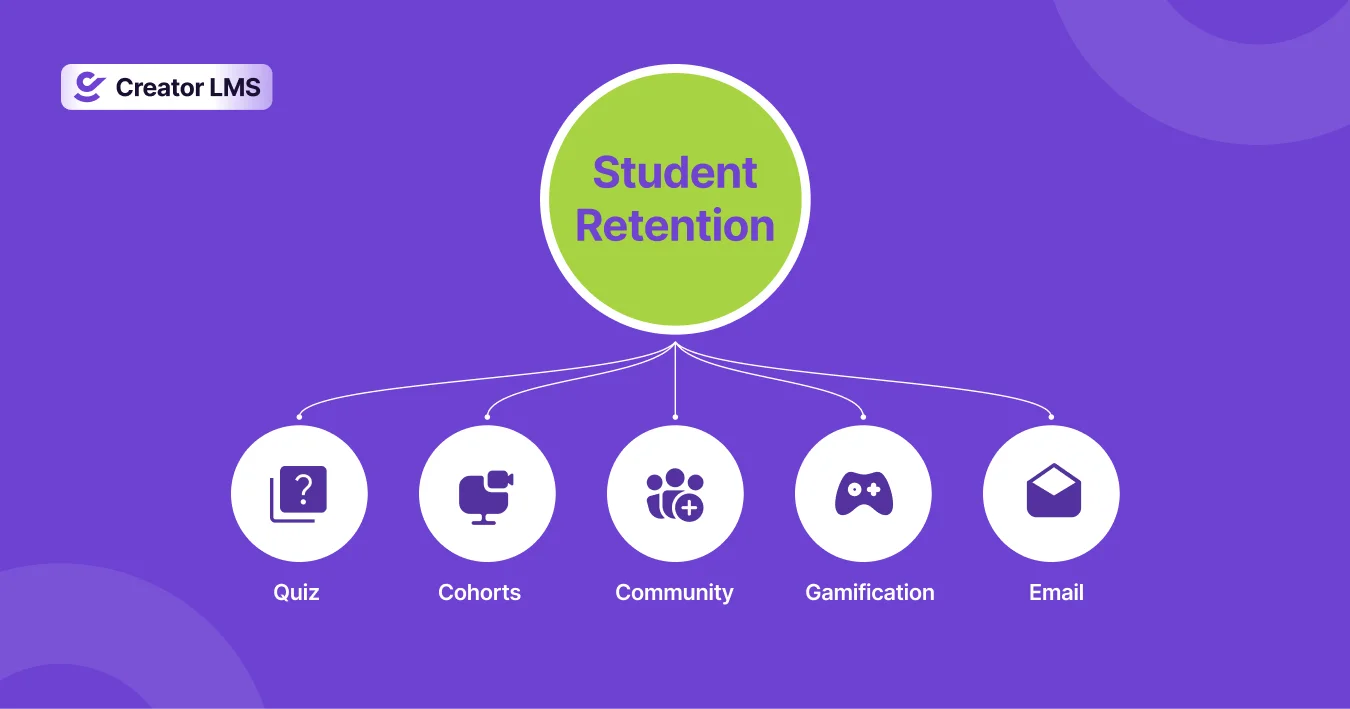
In this guide, we’re breaking down the FIVE most powerful ways to keep student engagement from start to finish:
If you want your students not just start your course but actually finish it and see results, this is where your retention strategy begins.
Before Anything Else: Get the Fundamentals Right
No retention strategy will work if the foundation of your learning experience is weak. Make sure you’ve covered these essentials:
1. Create Interactive Learning Experiences
Students stay engaged when learning feels active. This means adding video and audio, assignments, and quick challenges. Also, make the content personalized for each of your target audiences.
Example: A “What Would You Do?” interactive scenario in a marketing course can increase the course completion rate significantly.
2. Offer Certificates
Completion badges and certificates motivate students to finish a course – especially when they can use them professionally. For professional certification courses, the average online course completion rate is higher, around 30% to 40%.
When students can display achievements on:
- Résumés
- Portfolios
…their motivation to complete your course skyrockets.
Example: A “Facebook Ads Specialist Certificate” helps students showcase credibility, giving them a clear incentive to finish the curriculum.
3. Strong Branding & Learning Experience
Clear navigation, a clean UI, and branded lessons create a professional feel. Focus on:
- Consistent branding
- Intuitive layout
- Smooth quiz and assignment flows
- Visible progress indicators
When students feel they’re in a premium environment, they naturally stick around longer.
4. Drip Content: Keep Students From Feeling Overwhelmed
When students see 40 lessons at once, many freeze. Drip content solves this by releasing lessons gradually so students follow a planned journey.
Example: Week 1 lessons unlock on day 1, Week 2 on day 7, and so on. As a result, students stay focused and are less likely to skip ahead or burn out.
5. Clear Purpose & Defined Outcomes
Retention rises when students know exactly what they’ll achieve.
Example: Instead of “Learn Social Media,” say “Create 30 days of viral content and build your first 1,000 followers.”
Once these basics are strong, it’s time to unlock the real drivers of retention.
5 Strategies For Improving Student Retention
Here are five simple, impactful tactics that leverage the right tools to significantly elevate your students’ experience and dramatically improve course completion rates
1. Email Automation: Re-engage and Motivate Students Continuously

Email is one of the most powerful retention tools. It brings students back even when they drift away. You can send a student a nudge when they finish a lesson to remind them from time to time.
Use Case:
i. Onboarding Flows: A welcome sequence showing students how to start, where the community is, how to ask questions, etc.
ii. Reminder Emails for Inactivity: If a student hasn’t logged in for 5 days send an email like, “You’ve paused your journey. Your lesson ‘Working With HR Professionals’ is just 8 minutes – pick up where you left off!”
iii. Module Completion Celebrations: Send automated “Congrats!” emails after completing key lessons or modules.
iv. Personalized Encouragement: If a student fails a quiz twice, send an email offering tips or linking to relevant lessons.
Emails create the feeling of a supportive mentor – even in automated form. And another good thing is, even if they don’t check immediately, they will feel involved and attached whenever they see the email.
2. Gamification: Make Progress Feel Rewarding

People love earning things. Gamified rewards influence motivation through micro-rewards.
Use Case:
i. Points & Leaderboards: Students earn points for lesson completion, quizzes, or community participation.
Example: A “Top Creator of the Week” leaderboard drives healthy competition.
ii. Badges & Achievements: Give badges for first quiz attempt, first assignment submitted, or completing a module. This gives students small wins that make the larger journey feel achievable.
Gamification transforms learning into a habit. When a person gets the feeling of achieving something even before the course ends, it drives them to finish the course and maintain consistency. So, gamified rewards can really be an important part of retaining students.
3. Cohort-Based Learning: Learn Together, Finish Together
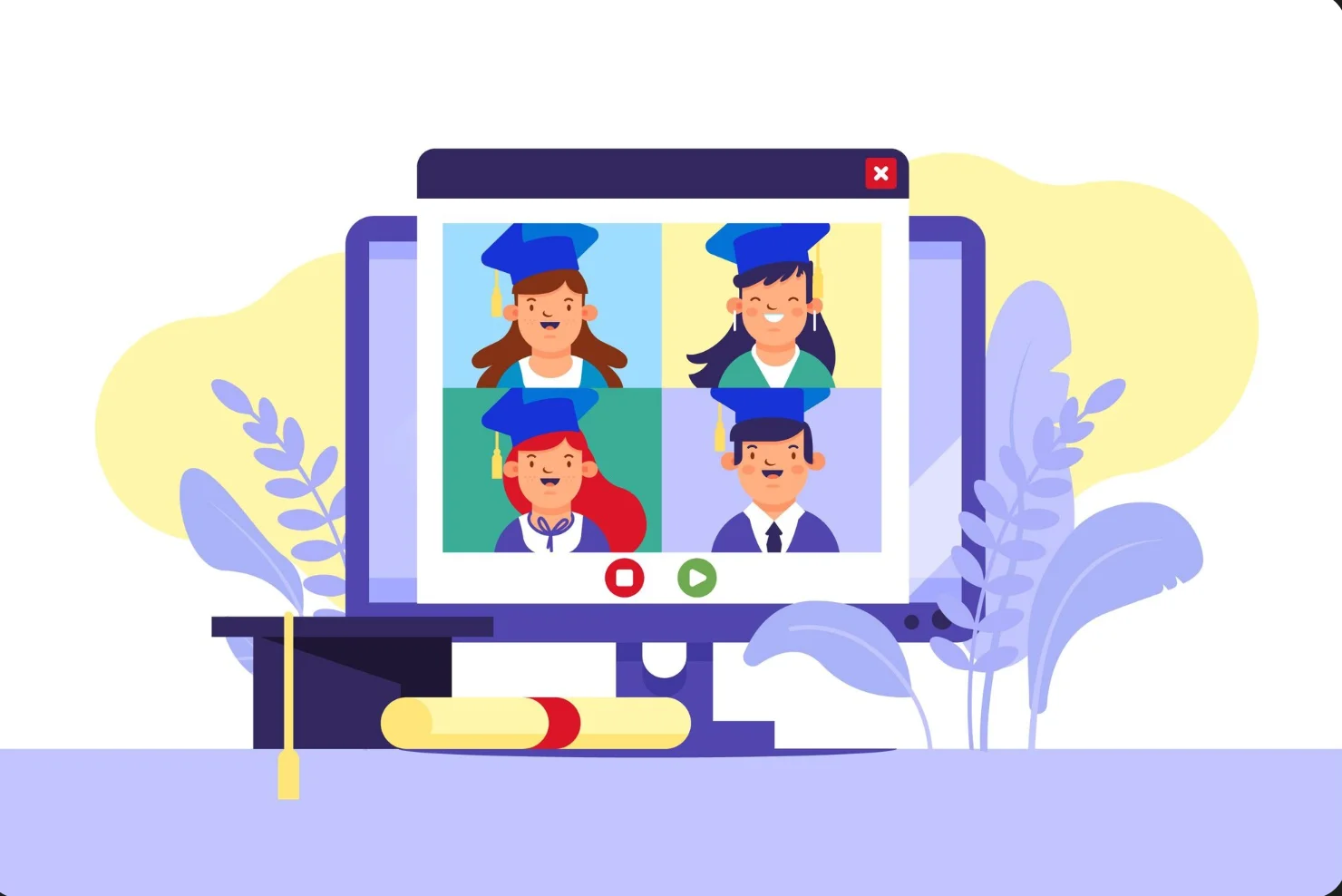
Learning alone is isolating, and it often leads to procrastination and failure. But when students learn with a group, they’re 10x more likely to complete a course. These courses turn the journey from a solitary challenge into a collective mission. Students are bound by shared deadlines and peer relationships.
Use Case:
i. Weekly Live Sessions: Students meet once a week in a live class to discuss progress or ask questions. Result: They don’t drop off because they know others are showing up and finishing their materials.
ii. Group Challenges: If a group challenge is assigned, a desire to do better is created. And especially if it’s shared among the group then the peer visibility increases completion.
Example: “Create your first 2-minute video by Friday and share it in the group.”
iii. Peer Review: Let students review each other’s assignments. It deepens learning and keeps students active.
Cohorts are perfect for transformation-based courses (fitness, career transitions, skill mastery).
4. Interactive Quizzes: Reinforce Learning & Keep Students Actively Engaged
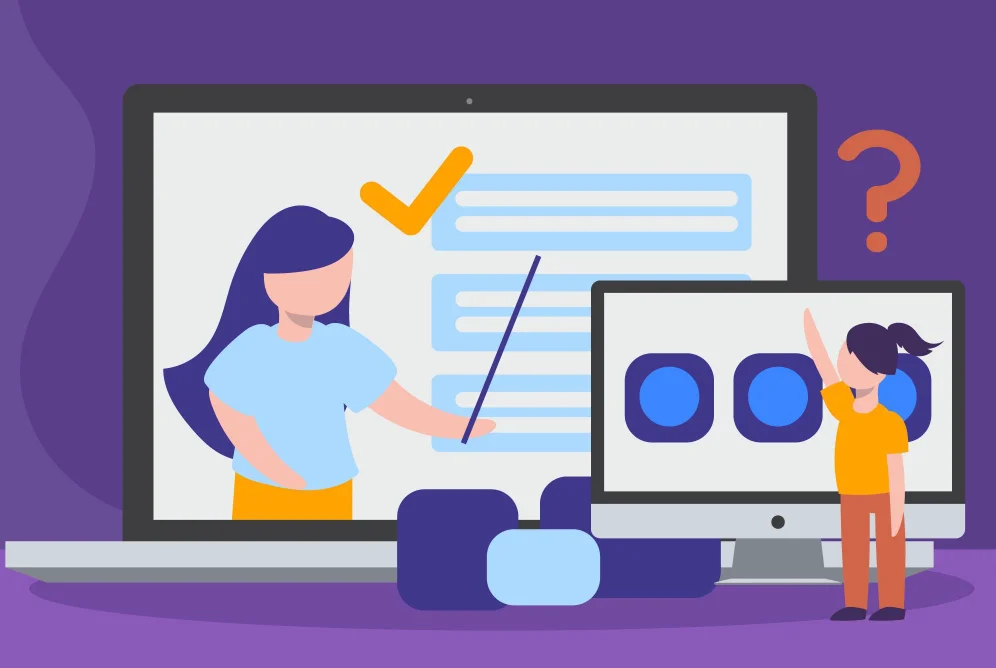
Interactive quizzes influence passive learning. They are not just evaluation tools. They keep students alert and more connected with the course by providing instant feedback.
Use Case:
i. Checkpoint Quizzes After Every Few Lessons: Quick 3–5 question quizzes ensure that students are understanding key concepts of each lesson.
Example: After a lesson on typography, ask: “Which font combination works best for a tech brand?”
ii. Scenario-Based Quizzes: Present real-world situations and ask students to choose the best response.
Example: In a business course, a scenario like: “Your customer acquisition cost doubled this month. What would be your first step?”
iii. Adaptive Quizzes: Difficulty increases or decreases based on answers. This keeps learners challenged without overwhelming them.
iv. Interactive Quizzes: Quizzes like matching and ordering increase a student’s problem-solving capabilities and cognitive skills.
v. Feedback-Driven Quizzes: The key is the feedback. After every wrong answer, provide helpful explanations and resource links to revisit. This will instantly close the knowledge gap of your learners.
Interactive quizzes act as micro-engagements; they are small but powerful moments that reset attention and give abetter understanding.
5. Community: The Long-Term Engine of Retention

A strong community is the ultimate retention engine because it gives students a reason to log in even on days they don’t feel like studying. It transforms the course into a vibrant environment where students invest socially.
Use Case:
i. Discussion Rooms or Q&A Forums: Community provides a space for asking doubts and receiving help from peers and mentors. This is where learners realize their struggles are shared, transforming isolation into shared experience.
ii. Accountability Threads: Simple daily prompts like “What did you learn or create today?” encourage consistent micro-progress. The simple act of posting publicly helps build lasting study habits.
iii. Feedback Sessions: Dedicated spaces where students can post their work for genuine, professional feedback. This elevates the course from content delivery to a creative workshop where skills are honed.
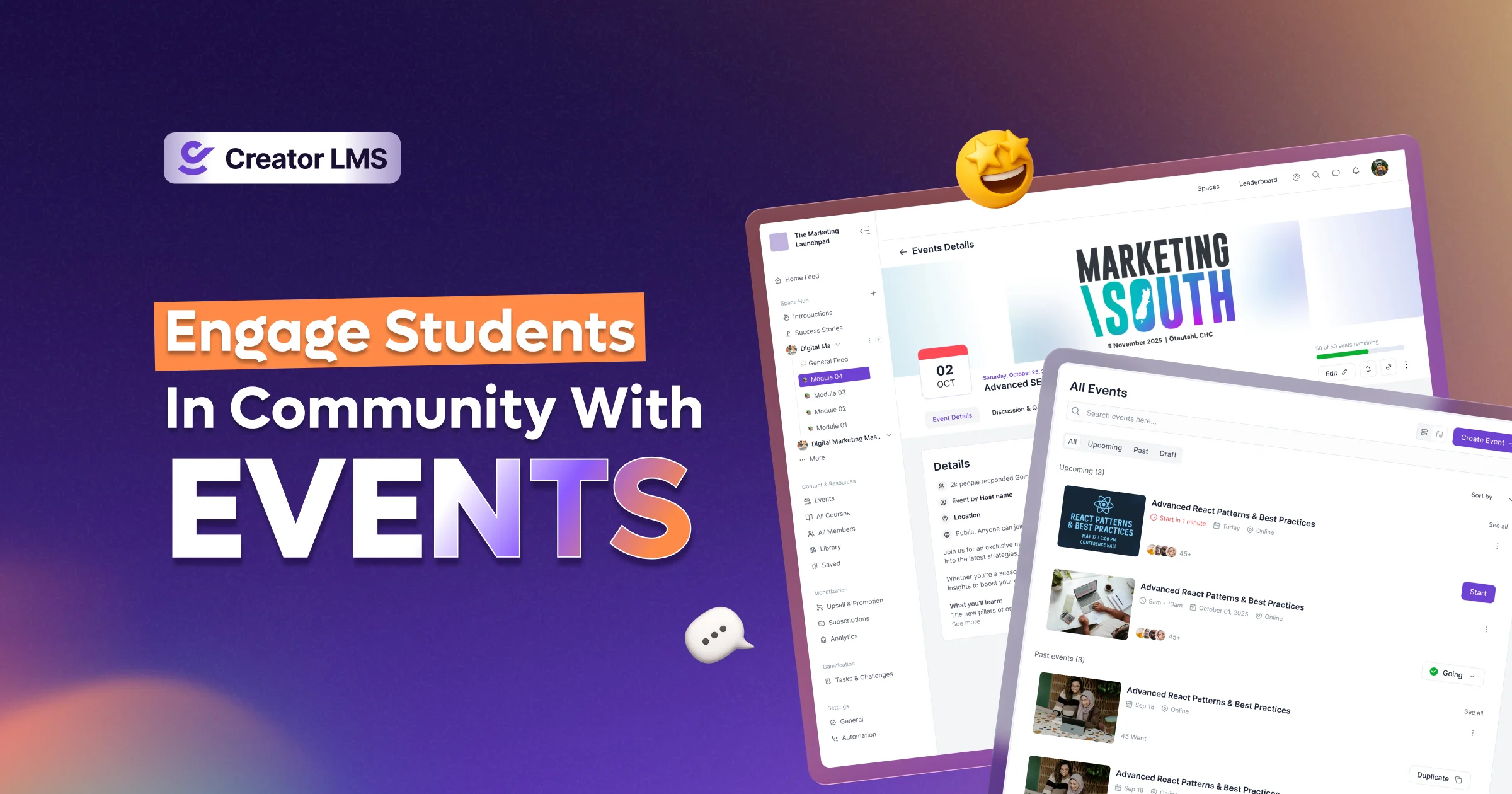
iv. Monthly Challenges or Events: Actively showcasing student success stories (new jobs, completed projects, course achievements) provides tangible proof of the course’s value, motivating every other member to push forward.
Example: “30-Day Creator Challenge” where students submit a daily piece of work.
Use the Right Tool to Offer a Memorable Learning Experience
Once you know how to retain students, it’s necessary to use a tool that gives you the accurate features to execute these.
So, if you are looking for a perfect tool to do that, Creator LMS could be a great option for you. It has built-in gamification, community, cohorts, and interactive quizzes to make your creator journey easier.
And the best part is it’s not dependent on any external tools.
Final Thoughts
Retention is about designing experiences that keep students motivated, supported, and accountable. With strong fundamentals, a system built around emails, gamification, cohort-based learning, interactive quizzes, and community, your students won’t just finish your course. In fact, they’ll enjoy the journey and continue learning with you.